
Healthy Meal: Why your body needs essential nutrients?
A Healthy Meal consists of nutrient-dense food that provides the body with essential nutrients such as protein, healthy fats, carbohydrates, vitamins, and minerals. These nutrients help the body function properly and support overall health and well-being.
A healthy meal is essential for maintaining a strong body. In today’s fast-paced world, many processed foods contain certain preservatives and additives that may not provide the nutrients that our body needs. As a result, people often consume more junk food and overlook the importance of proper nutrition.
While many focus on weight loss by joining a gym, nutrition plays an equally important role. Regularly eating unhealthy foods can negatively affect the body over time, whereas a balanced and nutritious diet helps support long-term health and well-being.
Good nutrition helps fuel your body every day. The food you eat supplies nutrients that support your brain, muscles, bones, skin, and immune system. A nutritious diet not only provides energy but also help the body grow, repair tissues, and stay strong.
Healthy meals rich in a variety of nutrients can help protect the body against several illnesses and diseases, including heart disease, diabetes, and certain types of cancer. Eating a balanced diet is one of the most effective ways to maintain long-term health.

Types of Nutrients
Nutrients are generally divided into two major categories:
Macronutrients:
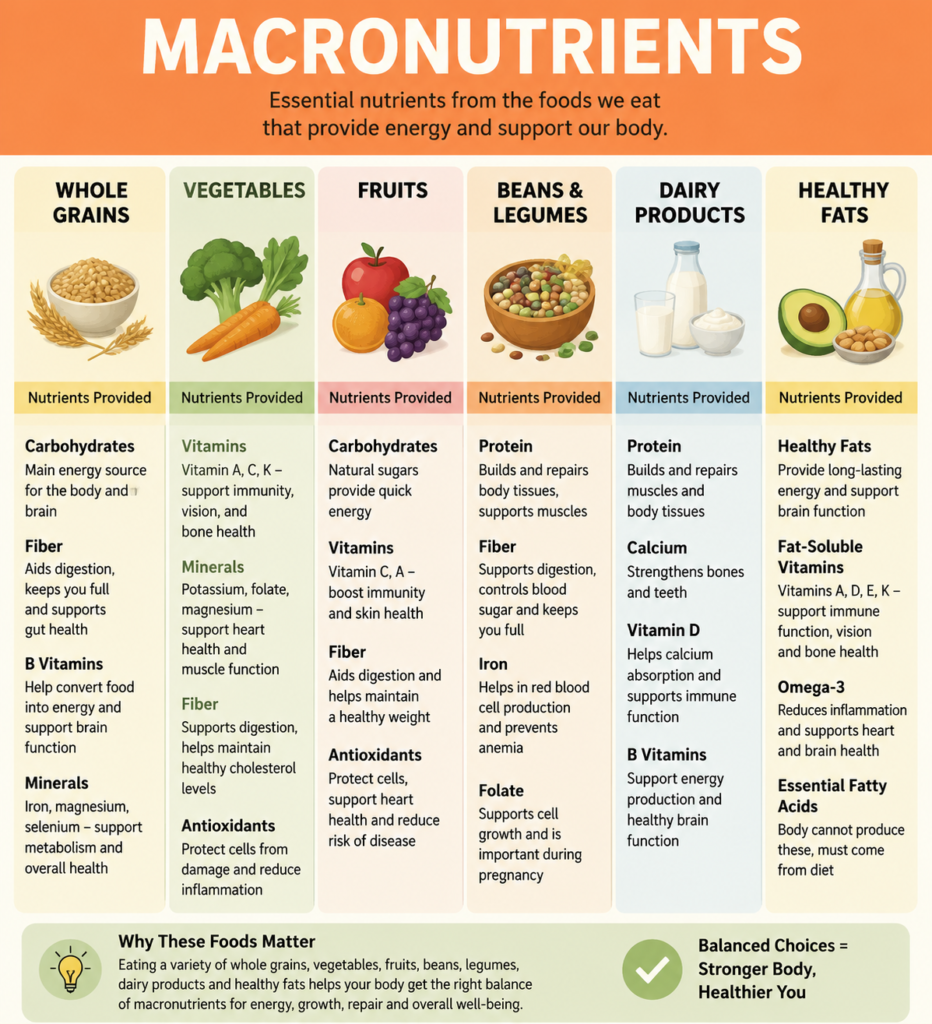
Macronutrients, or “Macros,” are the nutrients that your body needs in larger amounts to function. These are the group of nutrients that provide energy to maintain its structure and function. These also contain in the form of calories. Carbs are the main source sourse of energy, but your body can use other macronutrients if needed.
- Carbohydrates: 4 calories per gram(g)
- Protein: 4 calories per gram(g)
- Fats: 9 calories per gram(g)
Micronutrients:
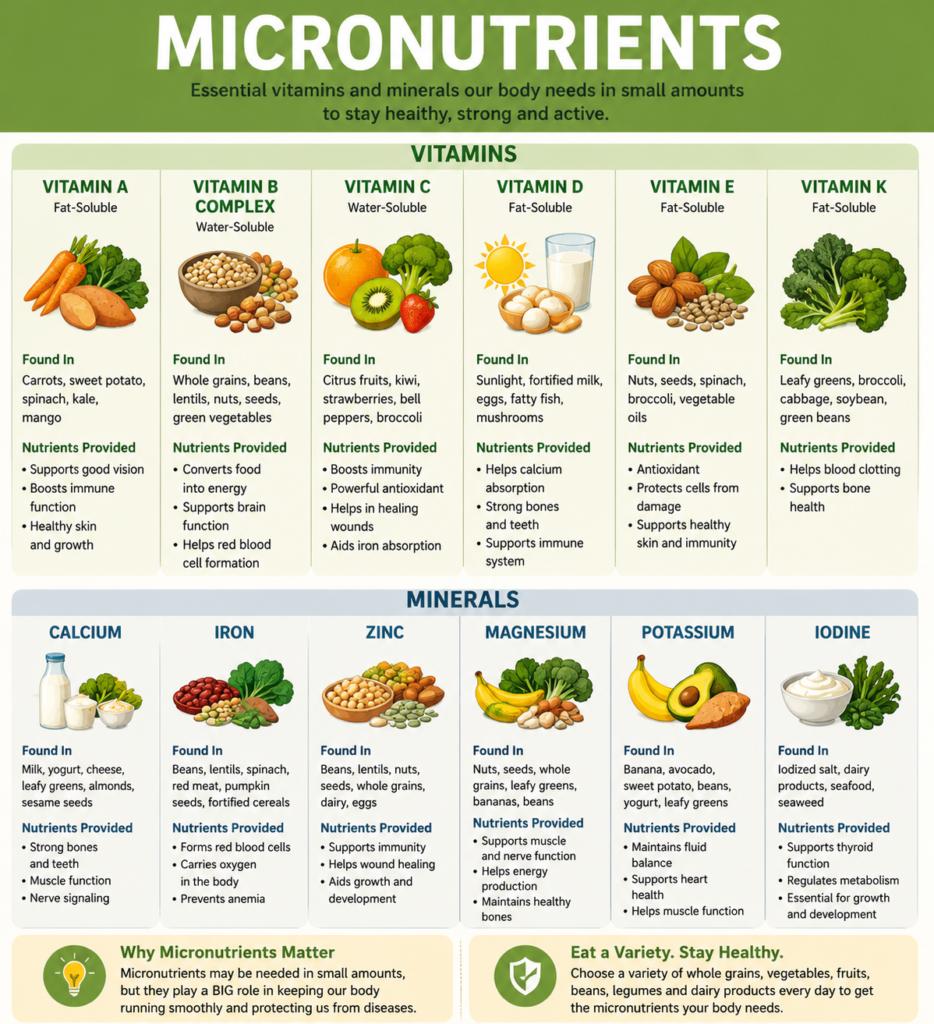
Micronutrients, or “Micro,” are the nutrients that your body needs in smaller amounts. They perform a range of functions, including enabling the body to produce enzymes, hormones, and other substances needed for normal growth and development. Deficiencies in iron, Vitamin A, and iodine are the most common around the world, especially in children or pregnant women.
Vitamins are necessary for energy production, the immune system, and blood clotting, and other functions. Meanwhile, minerals play an important role in growth, bone health, fluid balance, and several other processes.
These are required in smaller amounts but are equally important for maintaining good health which inlcudes
- Water-soluble vitamins
- Fat-soluble vitamins
- Microminerals
- Trace minerals
7 Healthy Meal choices
Eating Healthy does not have to be boring or restrictive. It provides the energy, vitamins, and minerals to the body, which help the body to function properly.
Whole grain
Whole-grain foods are the best choices for a nutritious diet. It provides fiber, Vitamins, minerals, and other nutrients. It helps to control cholesterol levels, weight, and blood pressure. These foods can help lower the risk of diabetes, heart disease, and other conditions.
Example inlcude:
- Rice
- Quinoa
- Buckwheat
- Multigrain flour
Fruits and Vegetables
These are naturally rich in vitamins, minerals, and antioxidants. They play an important role in supporting overall health and strengthening the immune system.
Benefits
- Rich in vitamins
- High in antioxidants
- Support digestive health
- Help protect against diseases
Protein-Rich foods
Protein is essential for muscle repair, growth, and overall body maintenance.
Good source of protein include:
- Meat
- Fish
- Eggs
- Plant-based protein sources
These foods provide essential amino acids that help the body build and repair tissues.
Dairy Products
These are rich in calcium and probiotics, which support strong bones and good gut health.
- Milk
- Yogurt
- Cheese
Listening to your body’s needs
Nature provides many nutrient-rich foods that help meet different nutritional needs. For example, if someone has low hemoglobin levels, foods such as Beetroot or pomegranate may be included as part of a healthy and balanced diet.
For a healthy and nutritious lifestyle, try not to skip breakfast. A balanced Breakfast can help:
- Provide energy for the day
- Improve concentration
- Reduce craving throughout the day
- Support healthy eating habits
Nutrient Sources at a Glance
| Nutrient type | Sources | Main Benefits |
| Carbohydrates | Rice, quinoa, buckwheat, multigrain flour | Energy production |
| Protein | Meat, fish, eggs, plant-based foods | Muscle growth & Repair |
| Healthy fats | Nuts, Seeds, Healthy oils | Brain & Heart health |
| Vitamins | Fruits & Vegetables | Immunity & overall heath |
| Minerals | Dairy products, fruits&vegratbles | Bone Health & Body Function |
“Health is like money; we never have a true idea of its value until we lose it.” – Josh Billings
Benefits of having healthy meal :
- Provide energy: It gives energy to do daily activity and excercise.
- Improves mood: It helps to feel better and also helps to support mental health.
- Keeps the heart healthy: It may help to reduce the risk of heart disease and high blood pressure.
- Improves the digestion of food: Foods rich in fiber support gut health and improves digestion.